

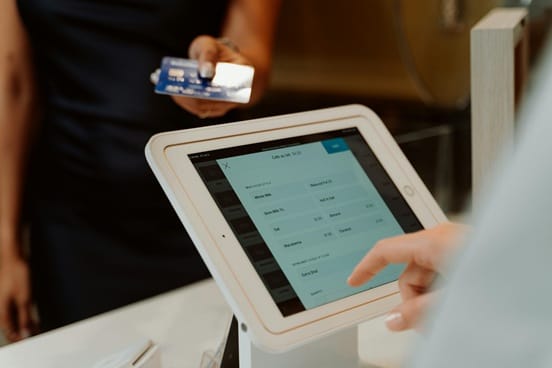

Payment processing in Canada is a critical part of running any modern business. Every retailer, restaurant, service provider, and e-commerce store relies on fast, secure, and reliable payment systems to get paid. This guide explains how payment processing works in Canada, what fees you are actually paying, and how to choose the best payment processor for your business in 2025.
Table of Contents
What Is Payment Processing?
Payment processing is the technology and banking network that allows a customer to pay using a credit card, debit card, mobile wallet, or online checkout. It includes the systems that authorize a transaction, move the funds, prevent fraud, and deposit the money into your business bank account.
Every transaction involves several participants:
- The cardholder
- Your business
- The payment processor
- The acquiring bank
- The issuing bank
- The card networks such as Visa, Mastercard, and Amex
A modern transaction takes only one or two seconds, even though multiple systems communicate with each other to approve the payment and verify security.
How Payment Processing Works in Canada
Understanding what happens behind the scenes helps business owners make better decisions about pricing, equipment, and providers.
Step 1. Authorization
The payment terminal or online checkout sends the transaction details to the card network and the issuing bank. The bank checks the card balance, verifies the card details, and evaluates the risk.
Step 2. Approval or Decline
The issuing bank sends a response that confirms whether the payment is approved or denied. Your terminal displays the result instantly.
Step 3. Clearing
Approved transactions are grouped together so they can be settled later in the day.
Step 4. Settlement and Deposits
The issuing bank releases the funds to the acquiring bank. The processor deposits the money into your business account within one or two business days for most Canadian merchants.
Credit Card Processing vs. Interac Debit Processing
Payment processing in Canada has one of the most unique environments in the world. Interac is widely used for debit transactions in person, while credit card networks dominate online and high-ticket payments.
Interac Debit
- Used for in-person POS payments
- Very low transaction fees
- Runs on the Interac network
- Not percentage based
Credit Cards (Visa, Mastercard, Amex)
- Use percentage-based rates
- Rewards cards cost more to accept
- Online transactions have higher risk and higher fees
Online Payments and E-Commerce
- Higher fees due to card-not-present risk
- Often require a payment gateway
- Best paired with fraud prevention tools
Optimizing your mix of payment methods can reduce your overall processing costs.
Understanding Payment Processing Fees in Canada
Payment processing fees can be confusing, which is why understanding the components helps business owners identify where savings are possible.
1. Interchange Fees
Paid to the cardholder’s bank. These rates are non-negotiable and set by the card networks. Interchange varies based on:
- The type of card
- Whether the transaction is in person or online
- The risk level of the industry
2. Card Network Fees
Visa, Mastercard, and Amex charge small fees for using their networks. These are also non-negotiable.
3. Processor Markup
This is the only negotiable part of payment processing. It is the amount your provider charges on top of interchange and card network fees. The markup determines whether your overall cost is high or competitive.
Your effective rate depends on your industry, transaction size, monthly volume, and whether customers pay in person or online.
Common Pricing Models Used by Canadian Payment Processors
Flat Rate Pricing
Simple and easy to understand. Suitable for very small businesses but usually more expensive for higher-volume merchants.
Interchange Plus (Cost Plus)
The most transparent pricing structure. You pay the actual interchange cost plus a small markup from the processor. This model gives merchants the most clarity and is often the most cost-effective.
Tiered Pricing
Transactions fall into categories such as qualified, mid-qualified, and non-qualified. This model often hides extra fees and is discouraged for merchants who want predictable costs.
Low-Risk and High-Risk Business Types
Low-Risk Merchants
- Retail stores
- Cafes and restaurants
- Salons and spas
- Trades and home services
- Office-based services
Medium to High-Risk Merchants
- Online-only stores
- Subscription billing companies
- CBD, vape, and wellness products
- Digital learning and coaching
- Event ticketing
- Travel-related sales
- High-volume e-commerce
Higher-risk merchants may have stricter underwriting and may require specialized high-risk payment processors with better chargeback management tools.
How Long Does It Take To Receive Your Deposits?
Fast funding is one of the biggest concerns for Canadian small businesses.
Most processors in Canada deposit funds within one or two business days. Some merchants qualify for next-day funding depending on:
- Their processing history
- Chargeback risk
- Industry type
- Transaction method
Consistent deposit timing is essential for payroll, inventory, and cash flow planning.
Payment Methods Canadian Shoppers Expect in 2025
Offering modern payment options improves conversion rates and helps reduce abandoned sales. Businesses in Canada should support:
✔ Contactless tap payments
✔ Interac Debit
✔ Visa and Mastercard credit
✔ Apple Pay and Google Pay
✔ Online checkout and invoicing
✔ Recurring billing and subscriptions
✔ Mobile card readers for on-the-go payments
Customers increasingly expect speed, security, and flexibility at checkout.
Choosing the Best Payment Processing in Canada
When evaluating providers, merchants should consider the following factors:
Transparent Pricing
Avoid providers that advertise one rate but charge additional hidden fees. Ask for a sample statement before signing.
Fast and Simple Onboarding
Most businesses should be able to start processing within one day.
Reliable Deposit Times
Steady funding is essential for financial stability.
Local Support
Canadian-based customer support is a major advantage when issues come up.
Modern Technologies
This includes updated POS terminals, secure online payment tools, virtual terminals, invoicing systems, and recurring billing features.
Industry Expertise
High-risk industries benefit from processors that understand underwriting, fraud tools, and chargeback prevention.
Final Thoughts
Understanding how payment processing in Canada works helps business owners keep their fees low, reduce risk, and create a smoother payment experience for customers. With the right payment processor, merchants can improve cash flow, simplify daily operations, and gain access to better tools for both in-person and online payments.
Avant Payments offers transparent pricing, fast deposits, and tailored solutions for both low-risk and high-risk businesses. Whether you operate a retail store, restaurant, or e-commerce business, our team is ready to help you accept payments more efficiently.
For official Canadian payment regulations, visit the Financial Consumer Agency of Canada:
https://www.canada.ca/en/financial-consumer-agency.html